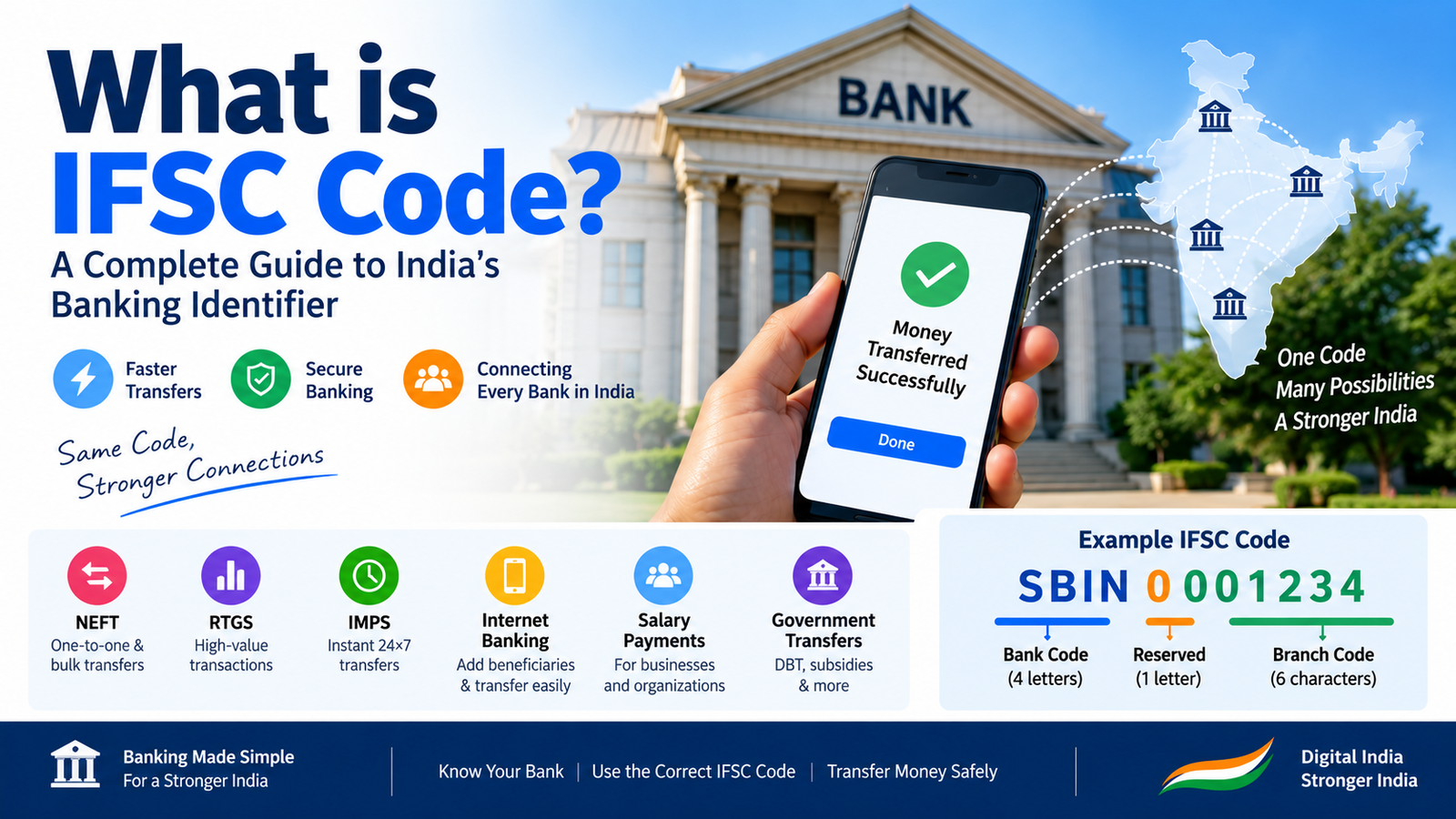
The IFSC Code (Indian Financial System Code) is one of the most important banking identifiers in India. Every time you transfer money using NEFT, RTGS, IMPS, or Internet Banking, the IFSC code helps the banking network identify the exact bank branch where the recipient’s account is maintained.
Whether you’re paying school fees, receiving your salary, sending money to family, or making business payments, understanding the IFSC code is essential for safe and accurate digital banking.
📌 What You’ll Learn
- What is an IFSC Code?
- IFSC Full Form & Meaning
- 11-Character IFSC Format
- Where IFSC is Used
- How to Find Any Bank’s IFSC Code
- Difference Between IFSC, MICR & SWIFT
- FAQs & Common Mistakes
What is an IFSC Code?
IFSC stands for Indian Financial System Code. It is an 11-character alphanumeric code assigned by the Reserve Bank of India (RBI) to every bank branch participating in electronic fund transfer systems.
Think of it as the digital address of your bank branch. Just like a PIN code helps identify a postal location, an IFSC code tells the banking network exactly where your money should be delivered.
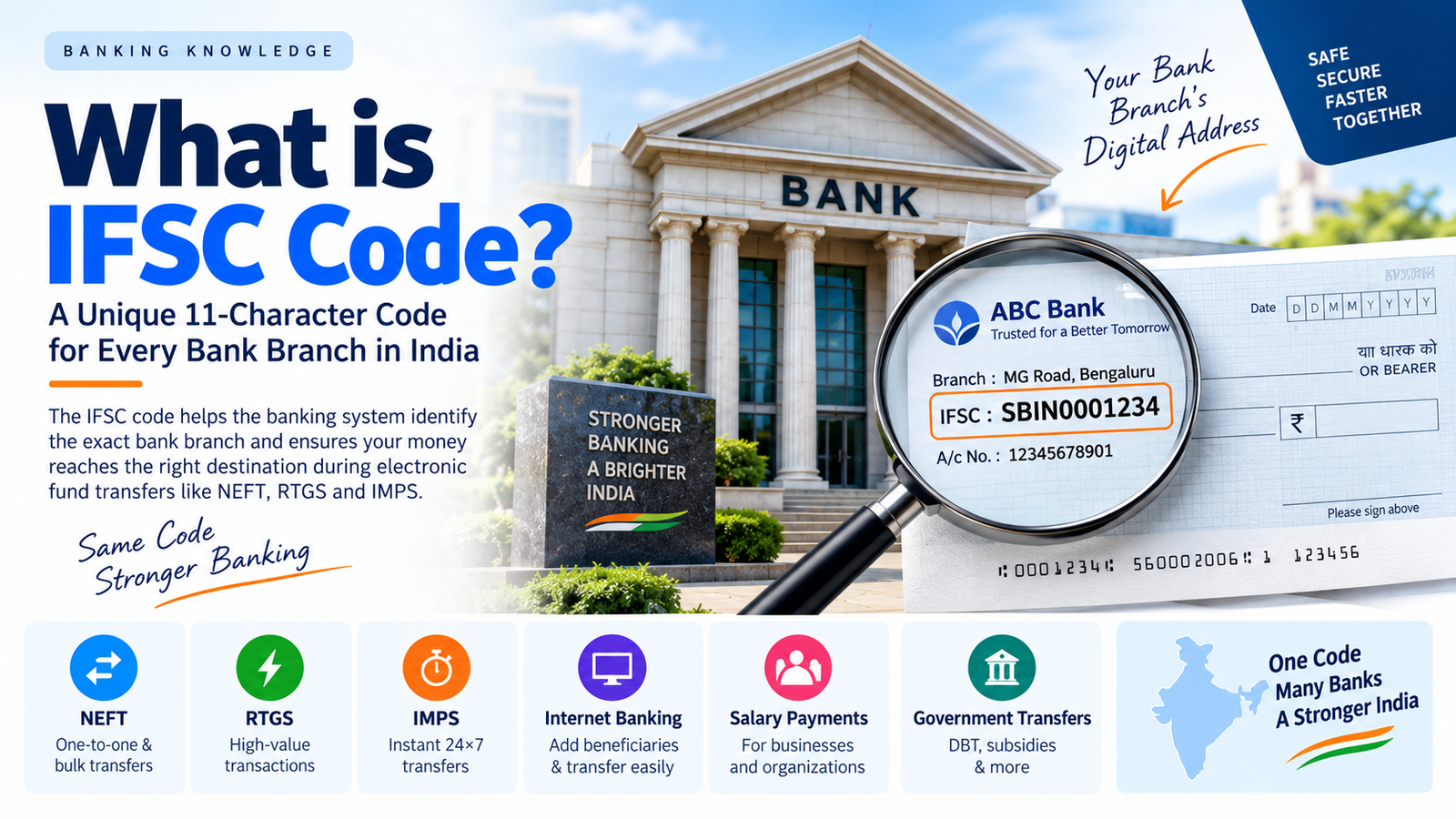
In the above example, this single code uniquely identifies one specific branch of the State Bank of India.
IFSC Full Form
| Letter | Meaning |
|---|---|
| I | Indian |
| F | Financial |
| S | System |
| C | Code |
The IFSC system was introduced by the Reserve Bank of India to make electronic banking faster, more secure, and error-free across thousands of bank branches.
Why is IFSC Code Important?
India has over 1.5 lakh bank branches. Many branches have similar names, so the banking system needs a unique identifier to prevent money from being routed incorrectly.
✅ IFSC Code is Required For
- NEFT Money Transfer
- RTGS Transactions
- IMPS Instant Payments
- Internet Banking
- Mobile Banking
- Salary Credit
- Business Payments
- Government DBT Transfers
IFSC Code Format Explained
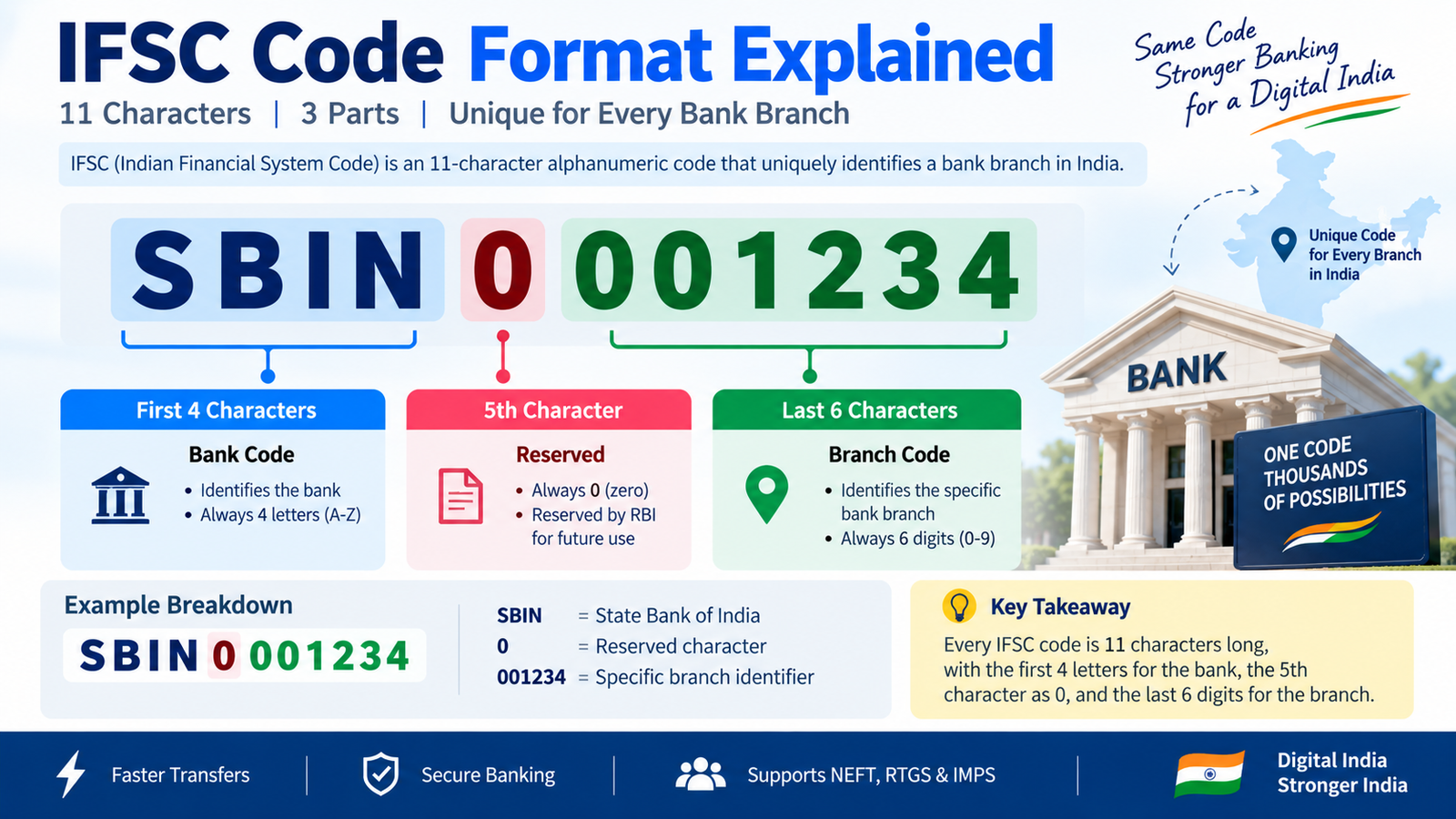
Every IFSC code contains exactly 11 characters.
| Part | Example | Description |
|---|---|---|
| First 4 Letters | SBIN | Bank Identifier |
| 5th Character | 0 | Reserved by RBI |
| Last 6 Digits | 001234 | Branch Identifier |
Example Breakdown
| Code | Meaning |
|---|---|
| SBIN | State Bank of India |
| 0 | Reserved Character |
| 000952 | Specific Branch Number |
How Does IFSC Code Work?
Let’s understand with a real-life example.
| Beneficiary Detail | Value |
|---|---|
| Account Holder | Priya Sharma |
| Account Number | 12345678901 |
| IFSC Code | HDFC0002456 |
Transaction Process
- Sender enters Account Number & IFSC.
- Bank validates the IFSC code.
- RBI payment network identifies the branch.
- Money is routed securely.
- Recipient receives the funds.
Where is IFSC Code Used?
| Banking Service | IFSC Required? | Purpose |
|---|---|---|
| NEFT | ✅ Yes | Electronic Fund Transfer |
| RTGS | ✅ Yes | High-Value Transactions |
| IMPS | ✅ Yes | 24×7 Instant Payments |
| Internet Banking | ✅ Yes | Beneficiary Registration |
| UPI | ❌ Usually No | Uses UPI ID / QR Code |
Difference Between IFSC, MICR & SWIFT
| Code | Purpose | Used In |
|---|---|---|
| IFSC | Electronic Fund Transfer | India |
| MICR | Cheque Processing | India |
| SWIFT | International Transfers | Worldwide |
| IBAN | International Account Number | Global |
Quick Summary
- IFSC → Domestic Money Transfers
- MICR → Cheque Clearing
- SWIFT → International Banking
- IBAN → International Account Identification
How to Find Your IFSC Code
| Method | Description |
|---|---|
| 🏦 Passbook | Printed on the first page |
| 📝 Cheque Book | Available near account details |
| 🌐 Bank Website | Use official branch locator |
| 📱 Mobile Banking | View under Account Details |
| 🔍 BankIFSCIndia.com | Search by Bank, State & Branch |
Popular Bank IFSC Prefixes
| Bank Name | Prefix |
|---|---|
| State Bank of India | SBIN |
| HDFC Bank | HDFC |
| ICICI Bank | ICIC |
| Axis Bank | UTIB |
| Punjab National Bank | PUNB |
| Canara Bank | CNRB |
| Bank of Baroda | BARB |
| Union Bank of India | UBIN |
Benefits of IFSC Code
| Benefit | Why It Matters |
|---|---|
| Accurate Routing | Money reaches the correct branch |
| Fast Processing | Speeds up NEFT, RTGS & IMPS |
| Better Security | Reduces routing errors |
| Nationwide Banking | Works across all participating banks |
| Digital Payments | Supports salary, DBT & business payments |
Common Mistakes to Avoid
❌ Never Do These
- Entering the wrong IFSC code
- Selecting the wrong branch
- Confusing MICR with IFSC
- Using an outdated IFSC after bank mergers
- Copying extra spaces while pasting
Frequently Asked Questions
Is IFSC mandatory for UPI?
No. UPI usually works with UPI ID, mobile number, or QR code. IFSC is mainly required for account-based transfers.
How many characters are in an IFSC code?
An IFSC code contains exactly 11 alphanumeric characters.
Can two branches have the same IFSC?
No. Every bank branch has its own unique IFSC code.
Is IFSC the same as MICR?
No. IFSC is used for electronic banking, while MICR is used for cheque processing.
Can an IFSC code change?
Yes. It may change after bank mergers, branch relocation, or RBI updates. Banks notify customers before implementation.
Conclusion
The IFSC Code is the backbone of India’s electronic banking system. This unique 11-character identifier enables secure, fast, and accurate fund transfers between thousands of bank branches across the country.
Whether you’re using NEFT, RTGS, IMPS, or Internet Banking, always verify the beneficiary’s IFSC code before completing a transaction. Using the correct IFSC ensures your money reaches the right destination safely and without delay.
